Comparing Portable Air Coolers and Industrial Fans
Maintaining comfortable working conditions is a common challenge in factories, warehouses, workshops, and commercial facilities, especially during hot weather. Portable air coolers and industrial fans are two popular options for improving airflow and reducing heat discomfort. Although both can support workplace comfort, they operate differently and serve different purposes. Understanding their differences helps businesses choose equipment that fits their working environment and operational needs. Industrial fans work by moving air from one area to another, creating circulation that helps remove accumulated heat and improve ventilation. They do not actively lower the air temperature. Instead, the moving air helps people feel cooler by increasing the evaporation of perspiration from the skin. Fans are particularly useful in areas where continuous airflow is needed, such as production lines, maintenance workshops, and large storage facilities.
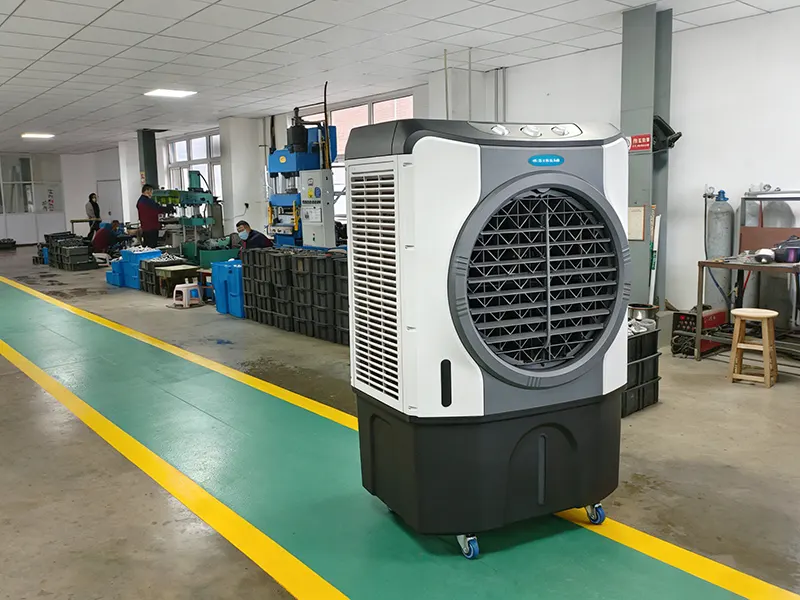
Portable air coolers use evaporative cooling technology to reduce the temperature of incoming air. Warm air passes through water-saturated cooling pads, and evaporation absorbs heat before the cooled air enters the surrounding space. This process can provide a more noticeable cooling effect than air movement alone, particularly in hot, dry environments. However, the actual result depends on outdoor humidity, ventilation, and the operating conditions of the facility. One major difference between the two options is their effect on perceived temperature. Industrial fans can make workers feel more comfortable without changing the room's air temperature. Portable air coolers can deliver a stream of cooler air, making them useful when both airflow and a reduction in air temperature are desired. Businesses should assess whether their main problem is poor air circulation or excessive heat before making a decision.
Humidity is another important consideration. Industrial fans do not add moisture to the air, although they may circulate existing humid air throughout the workplace. Evaporative air coolers increase humidity as part of their cooling process. They generally perform best in dry conditions, while their cooling effectiveness decreases as humidity rises. In humid regions or enclosed spaces with limited ventilation, industrial fans may be the more practical choice. Energy consumption and operating costs also influence equipment selection. Both portable air coolers and industrial fans can provide localized comfort without requiring the same type of installation as a central air-conditioning system. However, their actual energy use varies according to motor power, fan speed, water circulation requirements, and operating hours. Comparing rated power and expected daily usage provides a more reliable basis for estimating electricity costs than relying on equipment type alone.
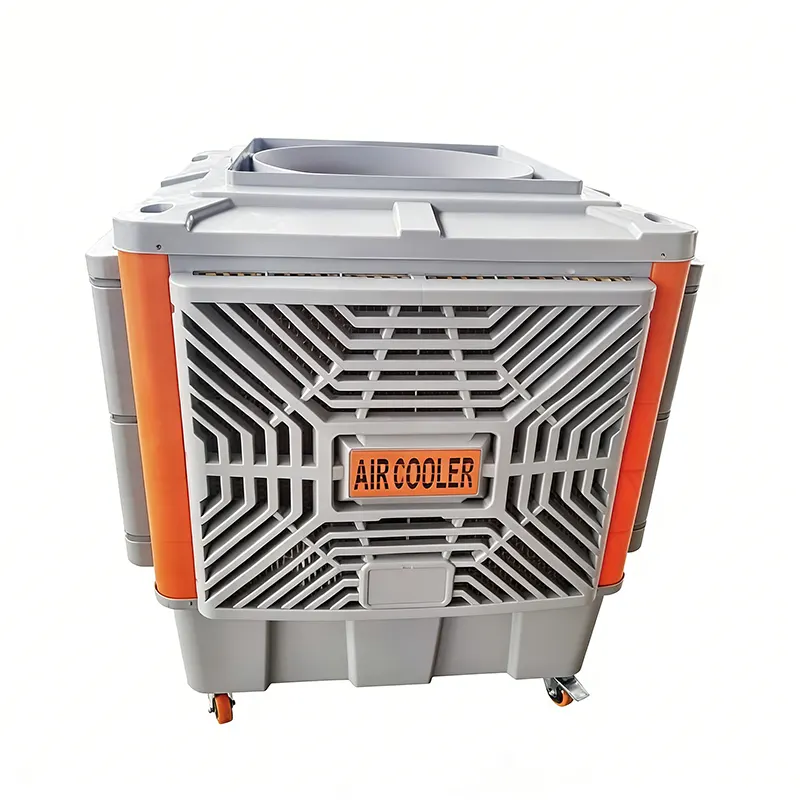
Installation flexibility is another advantage shared by these products. Industrial fans may be installed on walls, ceilings, stands, or other suitable structures, depending on their design. Portable air coolers can usually be moved between workstations or production areas when additional cooling is needed. Their mobility makes them attractive for temporary workspaces, equipment maintenance zones, loading areas, and facilities where heat loads change throughout the day. Maintenance requirements differ as well. Industrial fans generally require inspection of fan blades, motors, bearings, guards, and electrical connections. Portable air coolers require these basic checks where applicable, along with additional attention to water reservoirs, cooling pads, filters, and water distribution systems. Regular cleaning is important for both types of equipment, but air coolers need a consistent water-management routine to prevent scale buildup, blockages, and unpleasant odors.
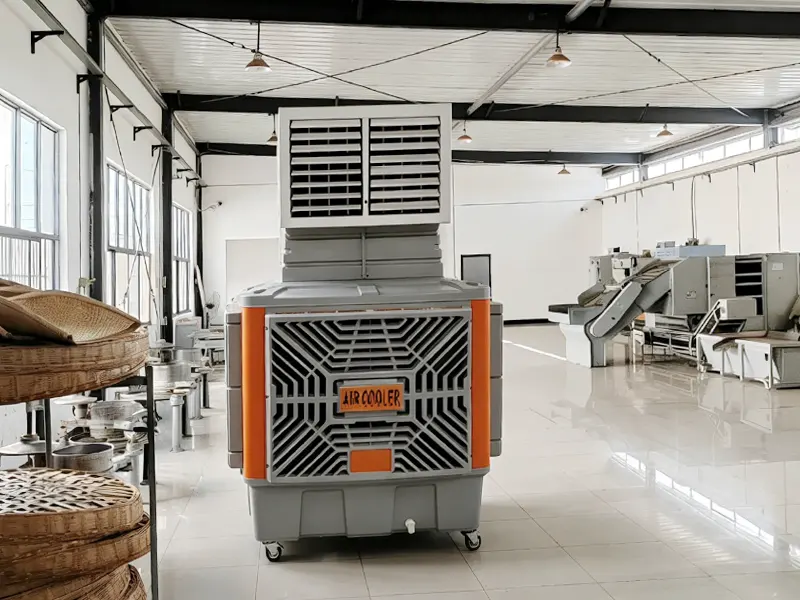
The layout of the facility should also guide the decision. In a workshop where heat accumulates near machinery, an industrial fan may help move stagnant air and support the existing ventilation system. Where workers need a cooler stream of air at specific stations, portable air coolers may offer a more suitable solution. Neither option should be expected to replace adequate ventilation or specialized heat-control systems where these are necessary. For some businesses, combining both technologies can deliver better results. Portable air coolers can supply cooled air to selected working areas, while industrial fans help distribute that air and reduce stagnant zones. The arrangement should be planned carefully, because poorly positioned fans may disperse the cooled air before it reaches the intended area. Effective placement helps improve comfort without wasting airflow.
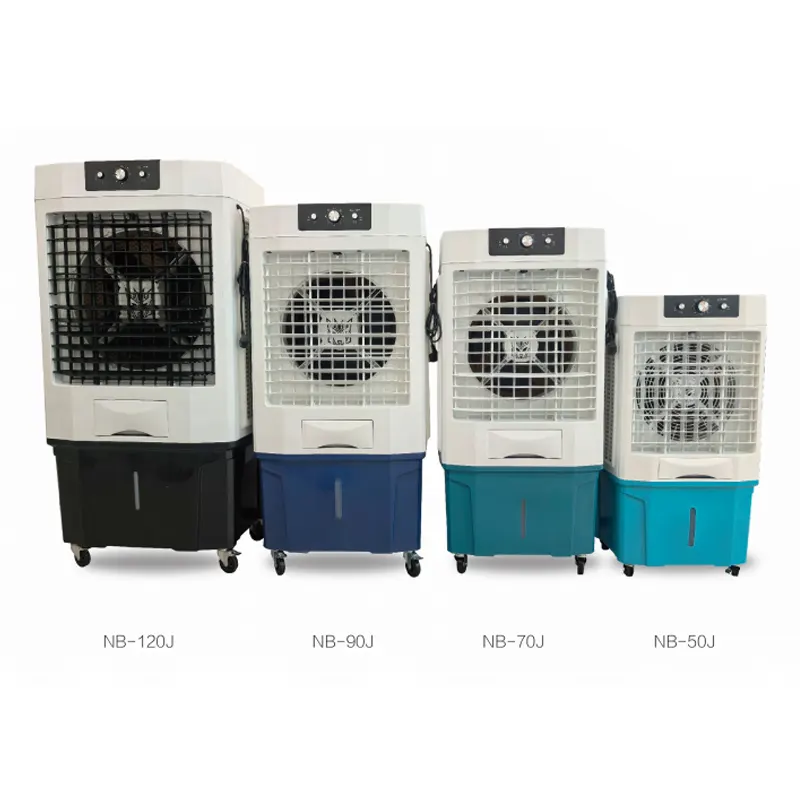
Before purchasing equipment, businesses should evaluate the working area's dimensions, heat-generating machinery, humidity levels, ventilation openings, worker locations, and expected operating hours. They should also consider cleaning access, water availability for evaporative coolers, noise levels, and long-term maintenance costs. A comparison based on actual site conditions is more useful than selecting equipment solely by price or airflow rating. JIANGYIN NOBLE ELECTRICAL CO., LTD., established in 1997, specializes in industrial and portable air cooling equipment. Its portable air cooler series offers airflow capacities from 2,000 to 23,000 m³/h, while its industrial air cooler series ranges from 18,000 to 50,000 m³/h. The company also manufactures large stainless-steel air cooling units with airflow capacities from 40,000 to 100,000 m³/h. By matching cooling equipment to workplace conditions and ventilation requirements, businesses can make a more informed choice and create a more comfortable working environment.