Best Cooling Practices for Metal Processing Workshops
Metal processing workshops face challenging cooling conditions throughout the year, particularly during hot summer months. Welding, cutting, forging, grinding, machining, and heat-treatment processes can generate considerable heat, while large doors and high ceilings allow hot outdoor air to enter. A practical cooling strategy helps workshops maintain better working conditions without creating unnecessary energy costs. The first step is to identify the main sources of heat inside the workshop. Furnaces, welding equipment, cutting machines, motors, compressors, and other production machinery can continuously release heat during operation. Understanding where heat is generated allows managers to focus cooling resources on the areas that experience the greatest temperature increase.
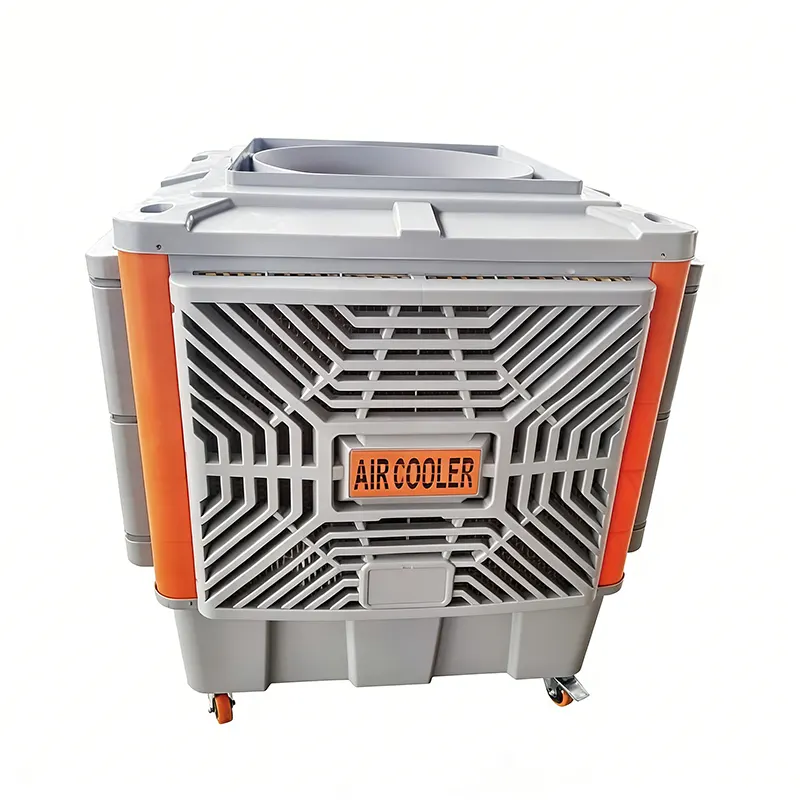
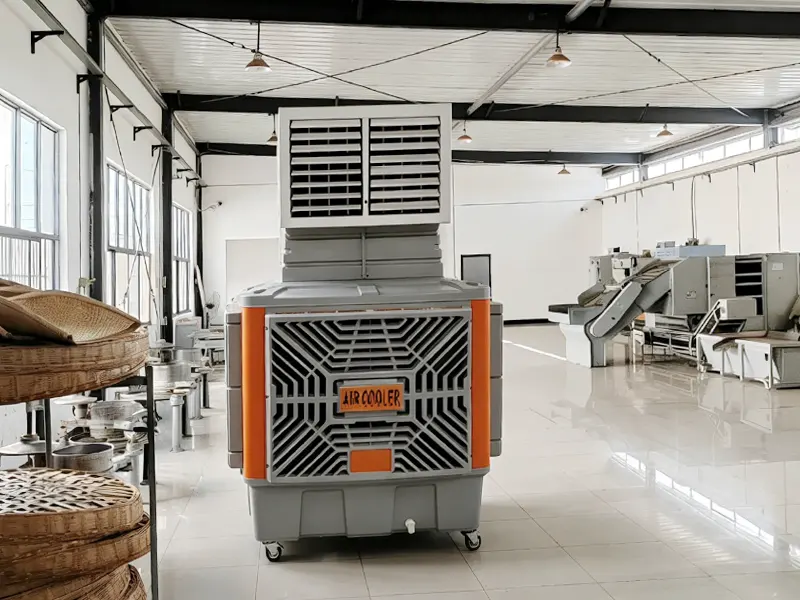
Ventilation should form an important part of any metal workshop cooling plan. Hot air needs a route to leave the building, particularly when production equipment is operating continuously. Doors, windows, roof vents, exhaust fans, and other ventilation openings can help remove accumulated heat. Industrial air coolers can work alongside these openings by supplying a continuous flow of fresh, cooled air. Evaporative air cooling is well suited to many metal processing environments because workshops are often large, open, or semi-open. The system draws warm outdoor air through water-saturated cooling pads. As water evaporates, it absorbs heat from the air, lowering its temperature before the cooled air is delivered into the working area. This process can provide effective cooling with relatively low electricity consumption.
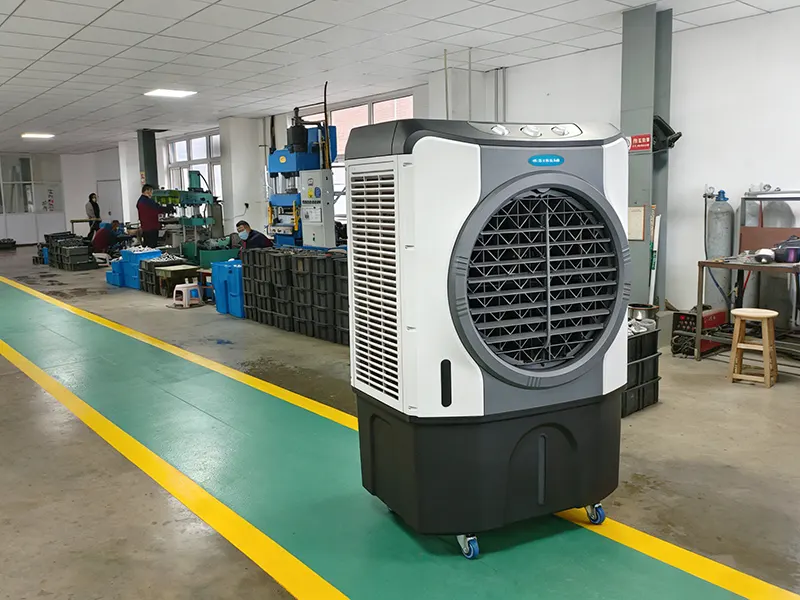
Correct positioning of air coolers is equally important. Units should be installed where they can draw air freely and deliver cooled airflow toward occupied areas. Machinery, storage racks, walls, and other obstacles can interfere with air movement, so equipment placement should be planned according to the workshop layout rather than simply choosing convenient installation locations. Targeted cooling can be particularly useful when different production areas have different heat loads. A welding station or furnace area may require considerably more cooling than a storage or inspection zone. Portable air coolers can be moved closer to specific workstations when necessary, allowing businesses to provide cooling where employees need it most without installing permanent equipment throughout the entire facility.
Selecting the appropriate airflow capacity is another important consideration. Workshop size alone does not determine cooling requirements. Ceiling height, number of workers, machinery density, heat generation, ventilation conditions, and local climate can all influence the amount of airflow required. Choosing equipment based on these factors helps ensure that the cooling system provides useful air circulation throughout the workshop. Reducing unnecessary heat generation can make cooling equipment more effective. Regular maintenance of production machinery can help equipment operate efficiently, while appropriate insulation around high-temperature equipment can limit heat transfer into occupied areas. Where possible, particularly hot processes can also be separated from general workstations to prevent heat from spreading across the facility.
Employee workstations should receive special attention when planning airflow. Workers positioned near welding machines, furnaces, cutting equipment, and other heat sources may experience greater thermal exposure than employees in other areas. Directing suitable airflow toward these locations can improve comfort and help workers remain productive during demanding production shifts. Cleaning and maintenance are especially important in metal processing workshops because dust, metal particles, and other airborne contaminants can accumulate on cooling equipment. Cooling pads, air inlets, fans, and water circulation components should be inspected and cleaned regularly. Keeping these parts free from excessive buildup helps maintain airflow and cooling efficiency while reducing unnecessary mechanical strain.
Water management should also be included in the maintenance schedule. Evaporative air coolers depend on water circulation to keep cooling pads properly saturated. Mineral deposits from hard water can gradually affect pads, pumps, and water distribution components. Regular inspection and cleaning of the water system helps maintain consistent evaporation and prevents avoidable performance problems. Workshop managers should monitor cooling performance throughout the summer rather than waiting for equipment failure. Reduced airflow, unusual fan noise, water leakage, uneven water distribution, or weaker cooling can indicate that cleaning, servicing, or component inspection is required. Early attention to these signs can help minimize downtime and maintain dependable cooling during busy production periods.
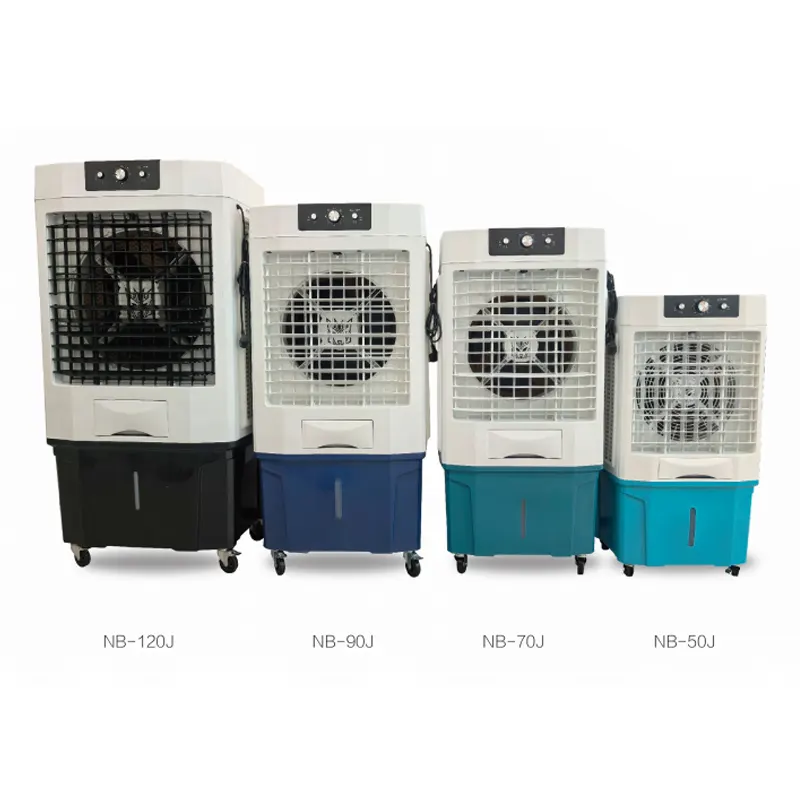
At JIANGYIN NOBLE ELECTRICAL CO., LTD., we manufacture industrial air coolers, portable air coolers, and large stainless-steel air coolers for demanding industrial applications. Our portable series offers airflow from 2,000 to 23,000 m³/h, industrial air cooler series from 18,000 to 50,000 m³/h, and large stainless-steel series from 40,000 to 100,000 m³/h. By combining suitable airflow capacity, effective ventilation, strategic placement, and regular maintenance, metal processing workshops can create a cooler and more comfortable working environment while keeping cooling operations practical and efficient.