A Complete Guide to Industrial Air Cooler Maintenance
Industrial air coolers play an important role in maintaining comfortable working conditions in factories, warehouses, workshops, and other large industrial facilities. These systems operate for long hours, especially during hot seasons, and are often exposed to dust, moisture, and demanding working environments. Regular maintenance is essential to ensure stable cooling performance, reduce energy consumption, extend equipment lifespan, and prevent unexpected downtime. Unlike traditional air conditioning systems, industrial air coolers use evaporative cooling technology, which relies on water circulation, cooling pads, fans, and airflow systems. Although their structure is relatively simple, each component must work properly to achieve efficient cooling. A well-maintained air cooler can provide consistent airflow and temperature reduction while keeping operating costs under control.
One of the most important maintenance tasks is regularly cleaning the cooling pads. Cooling pads are responsible for transferring heat through water evaporation, but over time, dust, mineral deposits, and impurities in the water can accumulate on their surfaces. Dirty cooling pads reduce air circulation and evaporation efficiency, causing weaker cooling performance. Cleaning or replacing cooling pads when necessary helps maintain optimal cooling capacity. The water circulation system also requires regular inspection. Industrial air coolers depend on a continuous supply of water to keep cooling pads properly saturated. Water pumps, pipes, valves, and distribution systems should be checked regularly to ensure smooth operation. Blockages or uneven water distribution can lead to dry areas on the cooling pads, reducing the overall cooling effect.
Water quality has a direct impact on maintenance requirements. Hard water containing high levels of minerals can cause scale buildup inside pipes, pumps, and cooling pads. Using cleaner water and periodically removing mineral deposits can improve equipment efficiency and reduce component wear. In areas with poor water quality, additional filtration systems may help extend the service life of cooling components. Fan maintenance is another key part of industrial air cooler care. The fan is responsible for moving large volumes of air throughout the workspace, so any problem with the motor, blades, or bearings can affect cooling performance. Regular inspections should include checking for unusual noises, vibration, loose connections, and signs of mechanical wear. Proper lubrication of moving parts can also help maintain smooth operation.
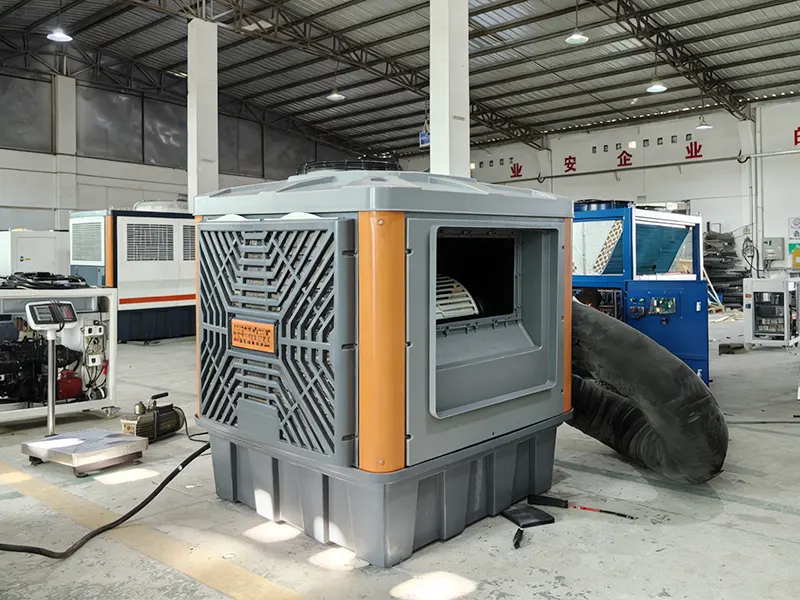
Electrical components should be inspected regularly to ensure safe and reliable performance. Wiring connections, control panels, switches, and protective devices should be checked for damage or loose connections. Since industrial air coolers often operate in humid environments, protecting electrical components from moisture is important for preventing failures and improving safety. Cleaning the exterior of the air cooler is also necessary, especially in industrial environments with high levels of dust and airborne particles. Dust accumulation on air inlets, filters, and protective covers can restrict airflow and reduce efficiency. Regular cleaning keeps air passages open and helps the unit deliver the designed airflow capacity.
Seasonal maintenance is particularly important before and after periods of heavy use. Before summer begins, companies should inspect the entire cooling system, clean components, test water circulation, and confirm that the equipment is ready for continuous operation. After the cooling season, proper cleaning and storage procedures help prevent damage and prepare the system for future use. Monitoring cooling performance can help identify potential problems early. Operators should pay attention to changes in airflow, unusual sounds, water leakage, increased energy consumption, or reduced cooling effects. Addressing small issues quickly can prevent more serious failures and reduce repair costs.
A proper maintenance schedule depends on the working environment and operating frequency. Facilities with heavy dust, high temperatures, or continuous operation may require more frequent inspections than cleaner environments. Creating a regular maintenance checklist ensures that important tasks are completed consistently and helps maintain long-term equipment reliability. Professional inspection is also recommended for large industrial cooling systems. Experienced technicians can evaluate fan motors, water pumps, electrical systems, and internal components to identify hidden problems. Regular professional servicing can improve efficiency and extend the operational life of industrial air coolers.